NOTES ON THIS PROMPT
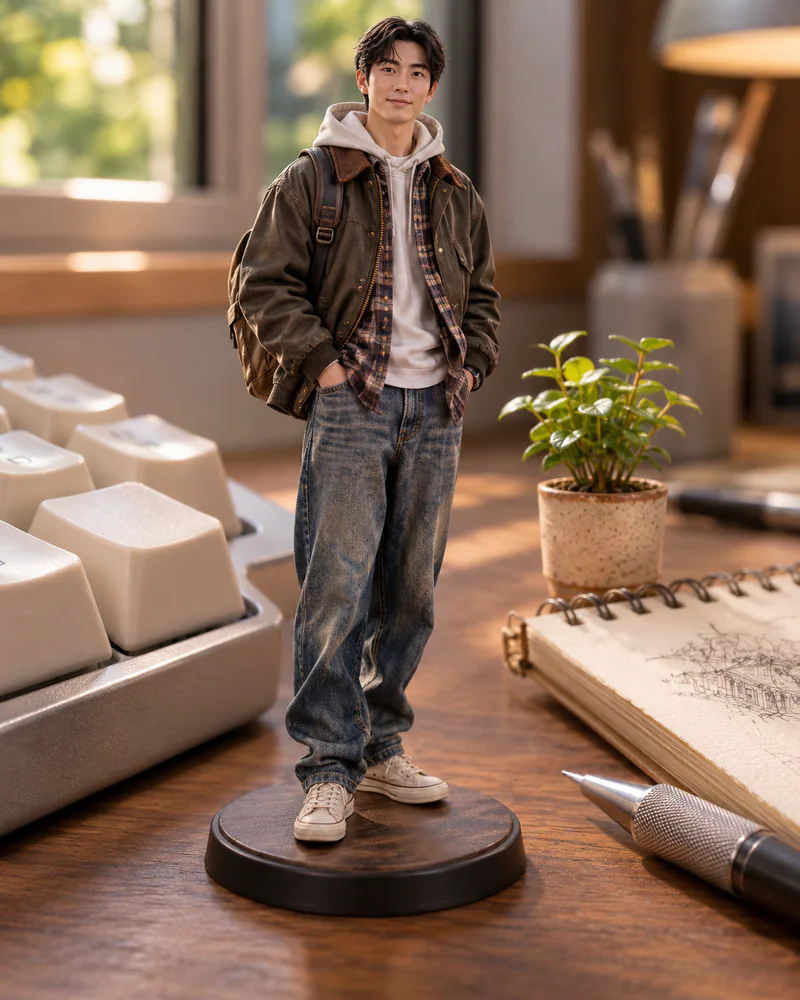
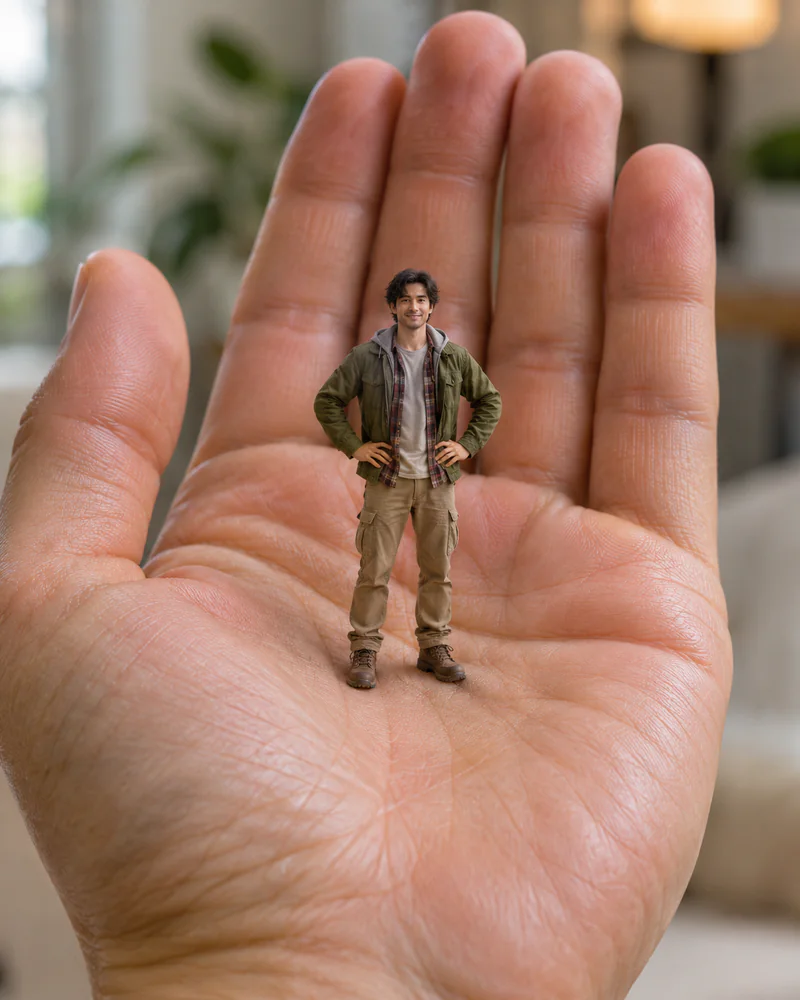
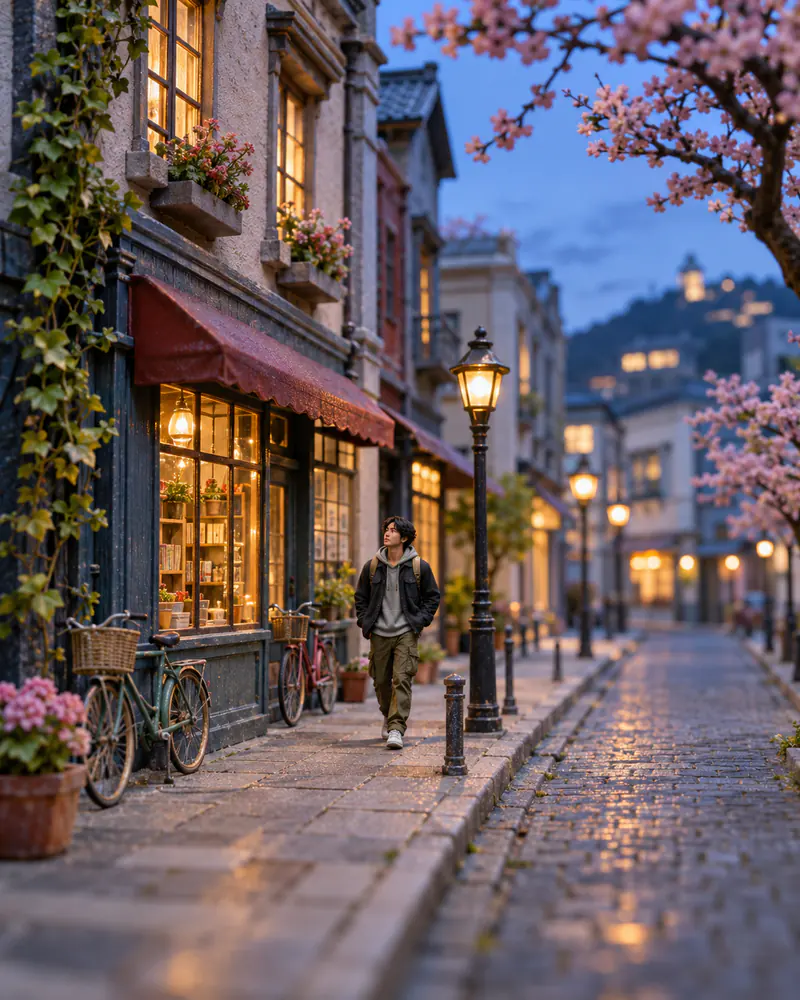
This miniature city walker starts from the uploaded face, then establishes its story through storefronts, parked bicycles and model-scale pavement.
Why this prompt works
- Light
- blue-hour ambient light mixed with tiny glowing windows is the main structural decision for this frame. It separates the subject from storefronts, parked bicycles and model-scale pavement without flattening the face, and it explains where every highlight and shadow should fall.
- Lens
- The specified 50mm tilt-shift lens at f/5.6 controls both proportion and context.
- Style
- handcrafted cinematic diorama photography gives the image its finish, while painted storefronts, wet pavement and realistic clothing fibers keeps the result grounded.
Four one-line variations
Change one of these at a time. If you change several, you will not know which one moved the result.
- Hair colour
- For the miniature city walker, replace the hair instruction with 'the uploaded hairstyle shaped by a slight street breeze' and keep every face-identity phrase unchanged so only the styling moves.
- Background
- For the miniature city walker, swap the setting for 'a narrow miniature avenue with a tram turning at the far corner' while retaining the same camera height, subject scale and wardrobe relationship.
- Lens
- For the miniature city walker, change the camera line to '65mm tilt-shift lens at f/8' for a different compression level without discarding the scene-defining objects.
- Light
- For the miniature city walker, rebuild the illumination as 'overcast daylight with warm shop interiors' and preserve the original exposure on the face so the identity remains stable.
When the result goes wrong
- Face warped
- If the likeness drifts because of the small face among repeated architectural lines, add 'symmetrical eyes, undistorted nose and jaw, exact facial proportions from the uploaded photo'. For the miniature city walker, put it directly after the identity sentence, before any scene description, so the model resolves the person before interpreting the environment.
- Plastic skin
- When surfaces become waxy, add 'visible pores, painted storefronts, wet pavement and realistic clothing fibers, matte highlights, no beauty retouching'. For the miniature city walker, naming several real materials gives the renderer separate roughness cues and prevents one glossy finish from spreading across skin, clothing and props.
- Broken hands
- If the pose damages fingers, append 'two relaxed walking hands with distinct fingers, natural knuckles, correct thumb placement, no fused digits'. For the miniature city walker, keep the hand action simple and physically supported by the nearby object; extra gestures compete with the already demanding face and setting.
How it compares to Mini Me Cafe Diorama
Compare this with mini me cafe diorama. This scene emphasizes an open urban journey rather than an intimate indoor miniature room, and its 50mm tilt-shift lens at f/5.6 preserves that relationship. Choose this version when storefronts, parked bicycles and model-scale pavement carries the narrative; use the comparison when its different environment better matches the mood you want to communicate.
See the other prompt