NOTES ON THIS PROMPT
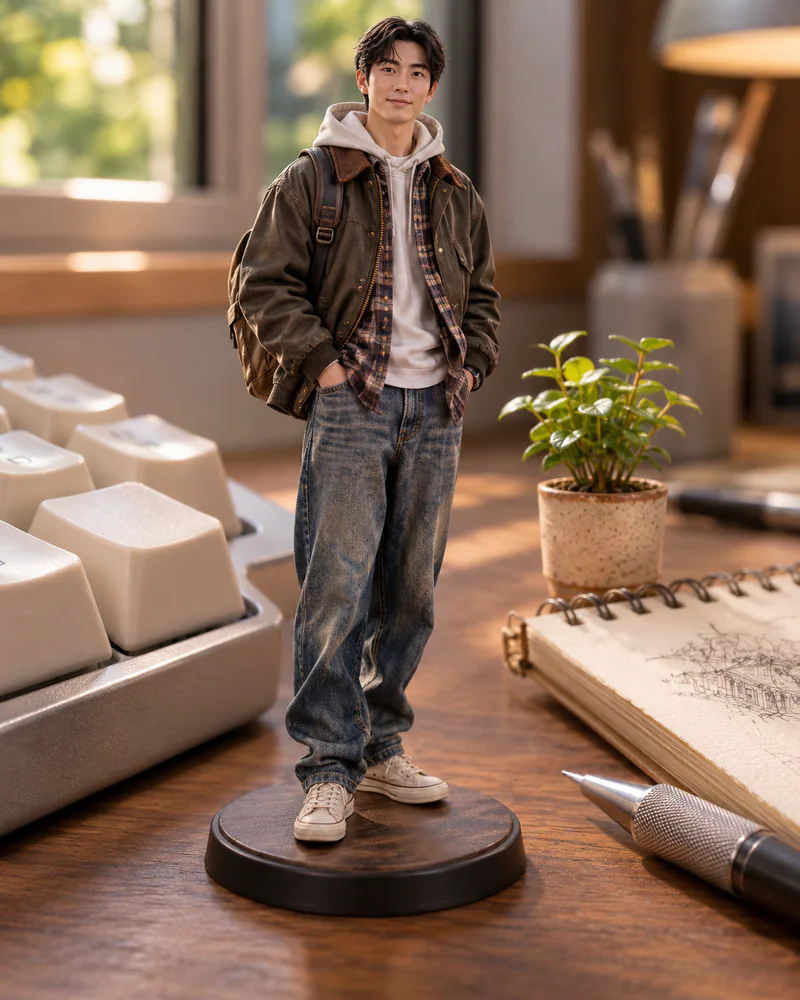
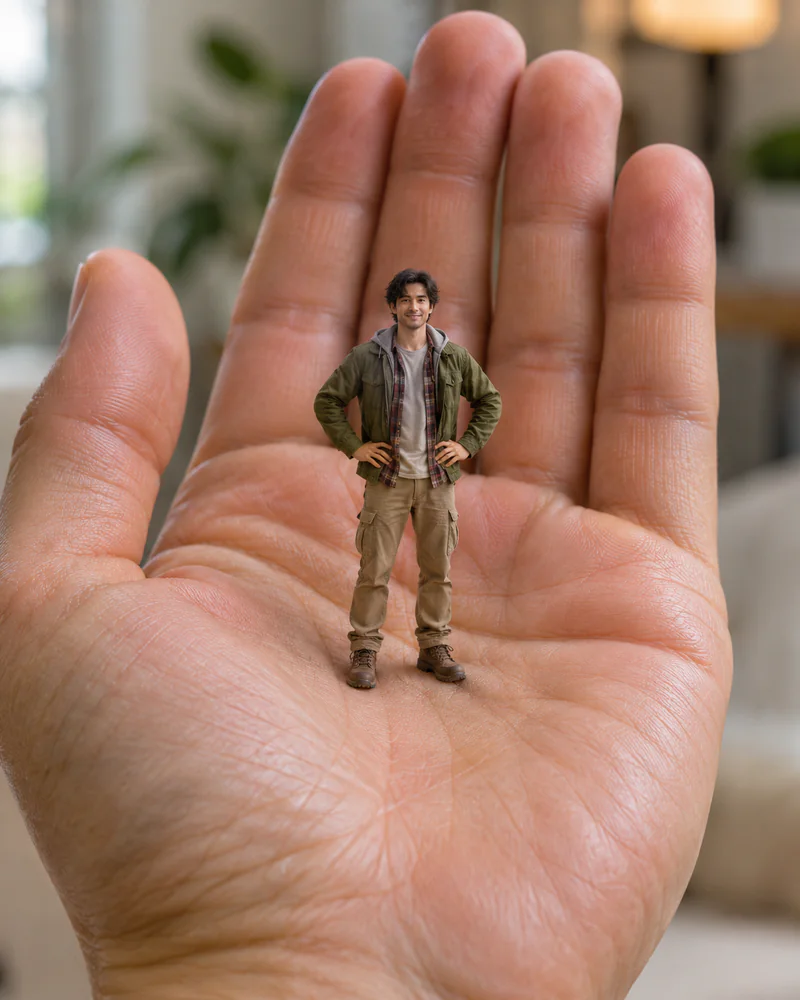
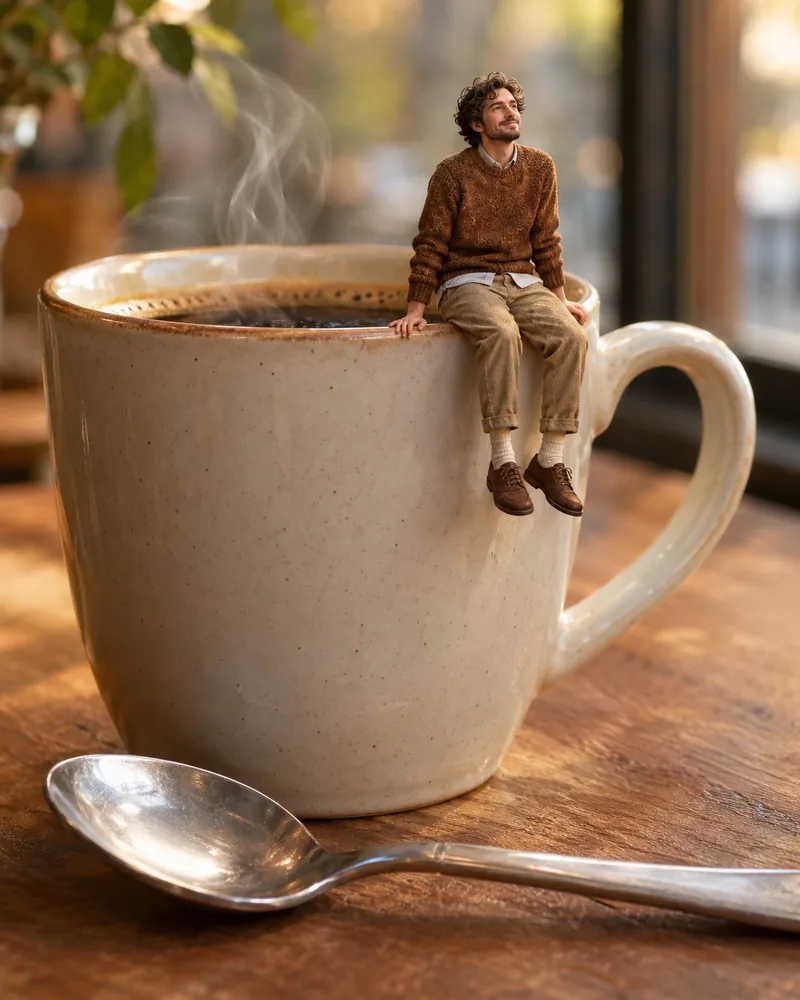
A tiny sitter on a coffee-cup rim creates immediate visual tension, but the measured cup and figurine sizes keep the result playful, stable and easy to read.
Why this prompt works
- Light
- Warm cafe window light wraps around the cup and the miniature at once, making both objects belong to the same photograph. Steam catches the backlight as a translucent veil rather than hiding their face, while a soft tabletop bounce opens the shadows beneath their legs.
- Lens
- The '100mm macro lens at f/4' provides comfortable working distance from the cup, which reduces facial distortion and keeps the circular rim recognizable. Side-on framing clearly shows both legs outside the cup; a front angle could make the body appear submerged in the drink.
- Style
- The strongest scale anchors are physical: a '3cm tall' miniature figurine, a '9cm-tall ceramic coffee cup' and an oversized spoon. Sharp glazed ceramic contrasts with real skin and woven clothing, while creamy cafe bokeh prevents unrelated background objects from confusing the proportion.
Four one-line variations
Change one of these at a time. If you change several, you will not know which one moved the result.
- Hair colour
- Add 'a warm chestnut edge light through their uploaded hairstyle' so the steam and hair separate, leaving the cut and facial identity unchanged.
- Background
- Swap the cafe interior for 'a bright kitchen breakfast table with a blurred pastry plate' while retaining the 9cm cup and 3cm figure relationship.
- Lens
- Use '85mm macro lens at f/5, slightly wider tabletop framing' to reveal more spoon and saucer without making the person look full-sized.
- Light
- Replace warm window light with 'cool overcast window light and a faint amber lamp behind the cup' for a quieter rainy-morning atmosphere.
When the result goes wrong
- Face warped
- If steam softens the likeness, add 'face unobstructed by steam, exact eye spacing, undistorted nose and mouth from the uploaded photo'. Keep vapor behind the head so it supports depth instead of erasing features.
- Plastic skin
- Counter a toy-like surface with 'visible pores, fine hair strands, cotton fabric weave, tiny imperfections in the ceramic glaze'. The miniature scale should come from proportion and optics, not from turning the person into shiny plastic.
- Broken hands
- For hands that fuse into the rim, specify 'both hands resting on their knees, five separated fingers, no contact with the cup edge'. A simple lap pose leaves the circular rim clean and removes ambiguous overlaps.
How it compares to Mini Me Cafe Diorama
The cafe diorama puts the tiny person inside a fully modeled room beside a thimble-sized drink. This version uses one real full-size cup as the dominant scale reference and a tighter macro viewpoint, making it better for an instantly readable single-object illusion.
See the other prompt